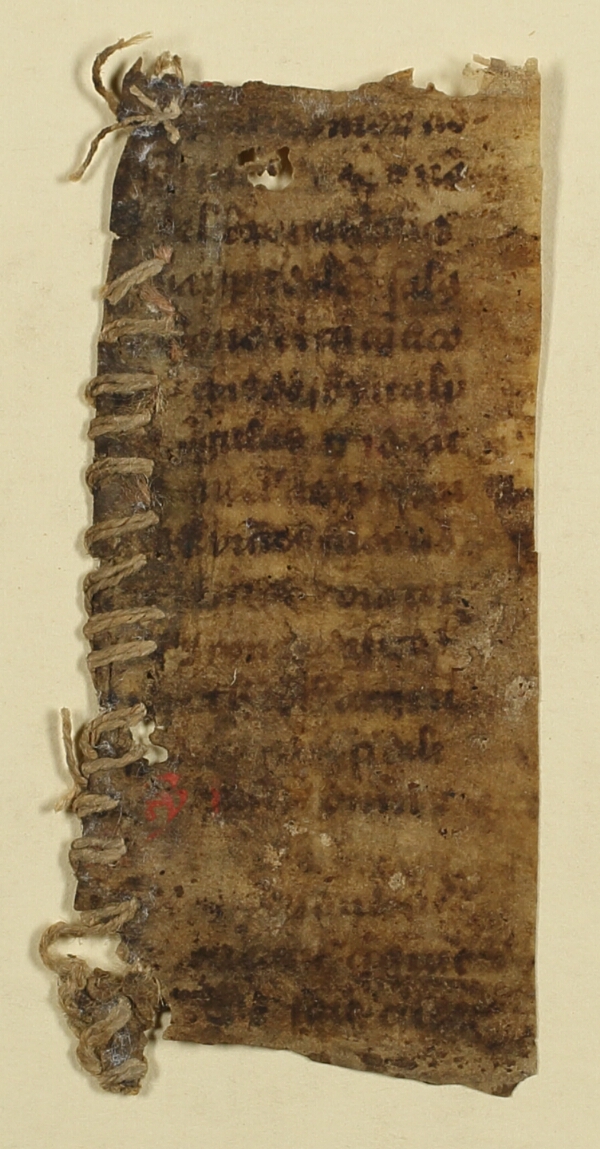
F-lodh: Liturgical psalter, Psalm 68:15-22 (with probable Psalms 59, 61-62 and 67)
Two small strips from a liturgical psalter, a book of the psalms laid out for the daily office. One face carries Psalm 68:15-22 (Vulgate numbering) in the Gallican version, the Latin psalter used in the medieval liturgy, with a two-line red initial at verse 17, "Exaudi me Domine quoniam benigna est". That division agrees with the Benedictine office for Wednesday Matins and suggests monastic use, which remains provisional. The other three faces are darker; they probably carry Psalm 67:20-24, the opening of Psalm 59 under a rubric for Wednesday, and Psalm 61:11 onward.
The Fragmentarium record describes Leipzig, Universitätsbibliothek, Fragm. lat. 367a: two parchment pieces of about 92 x 40 mm, used as endband cores in the volume Kirchg. 1112, Germany (?), dated to the second half or last third of the fourteenth century, titled "Unidentified (probably Breviarium)". Its description reports only single words and the rubric "fer. iiii" as legible. A psalter is often part of a breviary, so the title may well be right; the record names no text.
- Identification: identified, high, for one face: Psalm 68:15-22 on the side labelled 367a-1: 1v, where ten line beginnings fall on the psalm in order and the syllables carried over from lost line ends agree. The three other faces are probable only. The text is biblical, so the containing book is inferred from the layout: continuous psalm text, one-line red verse initials, and a two-line initial at 68:17, where the monastic distribution of the psalms begins the second part of Psalm 68. Chants drawn from Psalm 68 for Holy Week were considered and set aside because the face runs through the psalm verse after verse. A psalter of secular (non-monastic) use was considered for the second strip, with Psalm 52 under the Wednesday rubric; it fits the line lengths but not the column height the first strip implies. Where the reading can be checked against two forms of the text it has "respice in [me]" with the Clementine Vulgate, not "respice me" as in the Stuttgart edition.
- Transcription: image-only first reading by an isolated reader, who could give letter groups but no connected text, and a source-assisted reading. On 367a-1: 1v a research reader reread lines 2-6, 8-9 and 11-15 on reduced colour crops; lines 1, 7 and 10 are unread. On the other three faces only a few line ends or beginnings were attempted and none is secure. Accuracy has not been measured.
- Verification: a research reader compared the reread lines of 367a-1: 1v with a transcription of the Stuttgart (Weber) Gallican psalter, not with a page image of an edition or of a medieval psalter, and checked the monastic division of Psalm 68 in a modern table of the Benedictine psalm distribution. The coordinator read "oderunt me et", "-gat tempestas", "me. Improperium", "sustinui qui s-", the red I after "meam" and "-ur et non inveni" on enlargements of the image of 367a-1: 1v, against the same transcription of Psalm 68; no page image of an edition was used, and the other faces were not checked. The readings on the other faces have no such check. No human review.
Textual evidence
Manuscript image: 367a-1: 1v (canvas 1, 3011 x 5760 pixels). The passages are in the native-pixel boxes 700,300,2500,1800 for lines 1-5 and 700,2300,2500,4600 for lines 8-15. Only the beginning of each line survives; the rest is cut away or under the sewing thread. Abbreviations are resolved in parentheses; square brackets mark what is lost or unread; a question mark marks a doubtful reading.
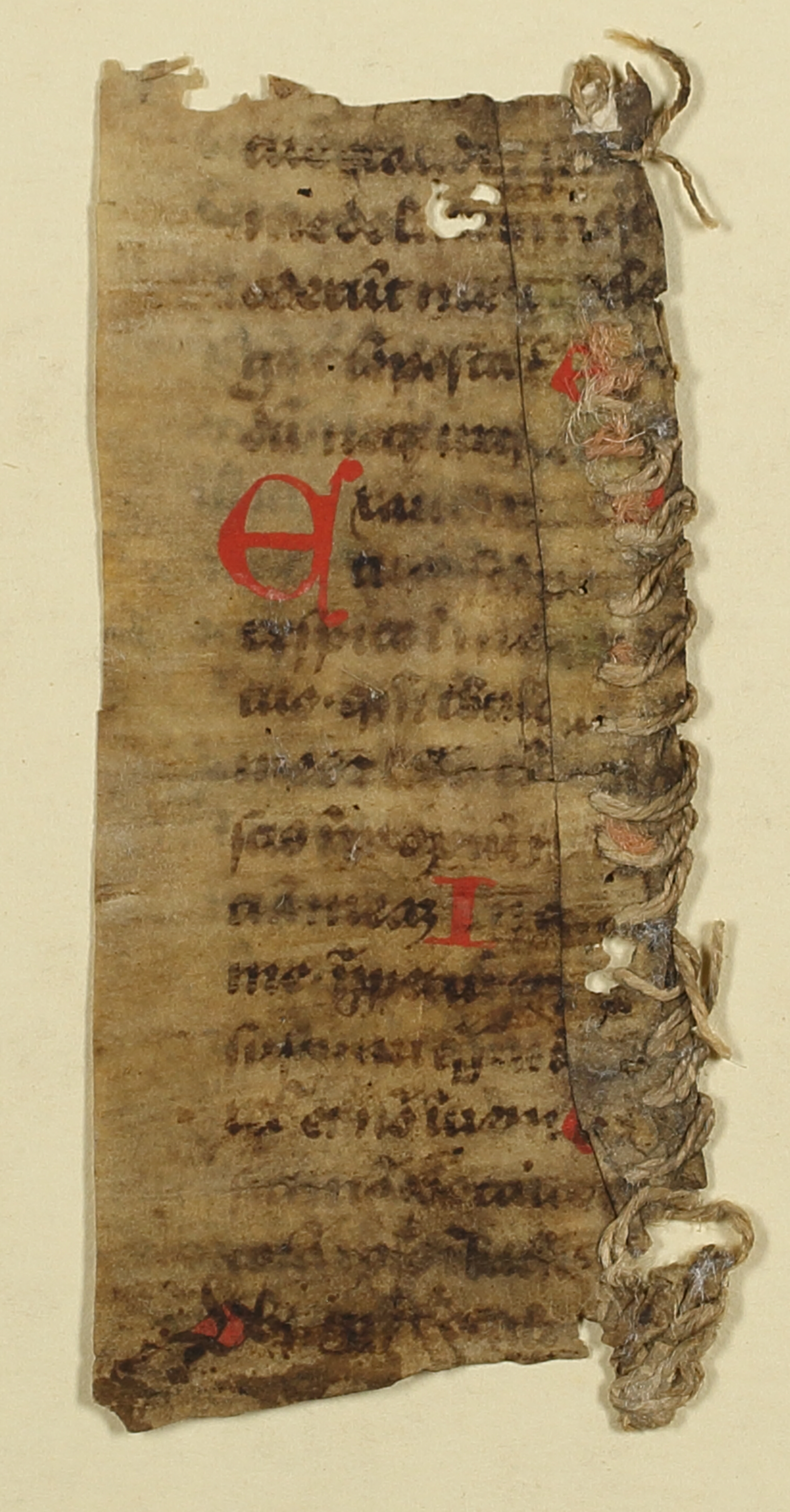
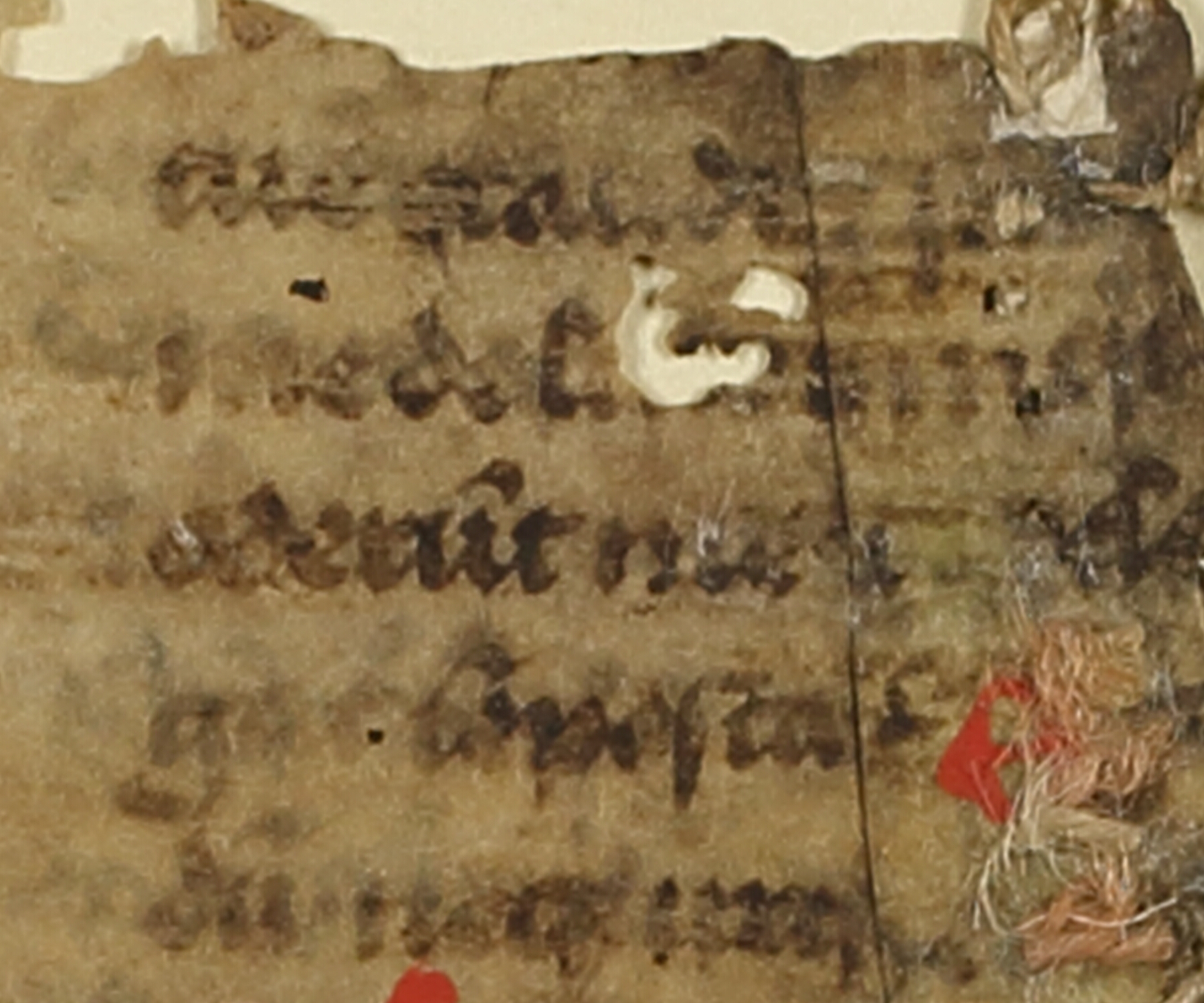
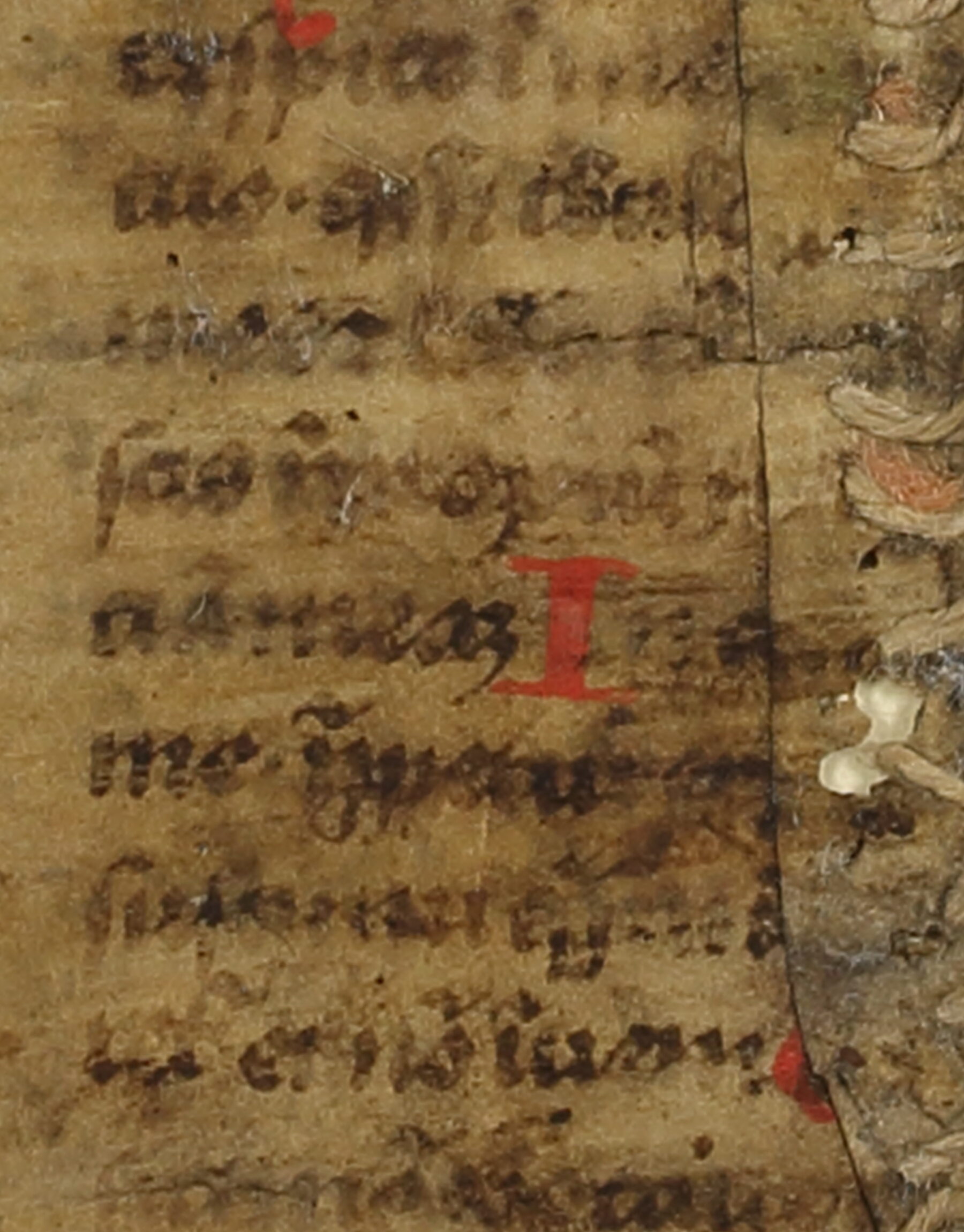
| 367a-1: 1v, line beginnings | Psalm 68, Weber Gallican text (Latin Library transcription) |
|---|---|
| 2: me de l[hole] ut n(on) inf[...] | (15) Eripe me de luto ut non infigar; liberer ab his qui |
| 3: oderu(n)t me (et) de [...] | oderunt me et de profundis aquarum. (16) Non me demer- |
| 4: g(a)t te(m)pestas [...] | -gat tempestas aquae neque absorbeat me profun- |
| 5: du(m) neq(ue) urgeat [...] | -dum neque urgeat super me puteus os suum. |
| 6: [red E, two lines high] xau[...] | (17) Exaudi me Domine quoniam benigna est misericordia tua |
| 8: respice i(n) [...] | secundum multitudinem miserationum tuarum respice me. (18) Et ne avertas faciem tuam a puero |
| 9: tuo . q(uonia)m tribul[...] | tuo quoniam tribulor, velociter exaudi me. |
| 11: scis? i(m)p(ro)p(er)i[...] | (20) Tu scis inproperium meum et confusionem et reverentiam |
| 12: [...] mea(m) . [red I] (n) c[...] | meam. (21) In conspectu tuo sunt omnes qui tribulant |
| 13: me . Imp(ro)p(er)iu(m) [...] | me. Inproperium expectavit cor meum et miseriam. Et |
| 14: sustinui q(ui) si[...] | sustinui qui simul contristaretur et non fuit, et qui consola- |
| 15: [.]ur (et) no(n) i(n)ueni : [red initial] | -retur et non inveni. (22) Et dederunt |
The right-hand column follows the cited Latin Library transcription of Weber, with capitalization, punctuation and line breaks supplied for comparison. The line breaks are inferred from the surviving line beginnings; each line then holds about 40 letters of unabbreviated text. The words supplied across lost portions are comparison text, not manuscript readings; in particular, neither "liberer" in verse 15 nor the wording after "confusionem" in verse 20 can be checked on the fragment. Line 8 reads "respice in", the form of the Clementine Vulgate and of liturgical psalters, where the Stuttgart text has "respice me". The beginning of line 11 is doubtful, and the word before "meam" in line 12 was not read. The E of verse 17 is two lines high and stands in the margin; the I of "In conspectu" is one line high and stands inside the line, as do red marks where other verses begin, so the E marks a division and is not an ordinary verse initial.
The psalm text was compared in the transcription of the Stuttgart Vulgate (R. Weber, Biblia sacra iuxta vulgatam versionem, Psalmi iuxta Septuaginta) at The Latin Library. The division of Psalm 68 into verses 2-16 and 17-37 for the second nocturn of monastic Wednesday Matins, and Psalm 59 as the first psalm of that office, are taken from the psalm table of the Divinum Officium project (section Daym3_), which follows the Benedictine breviary. This is a modern table; no medieval monastic psalter was compared.
The other faces and the leaves
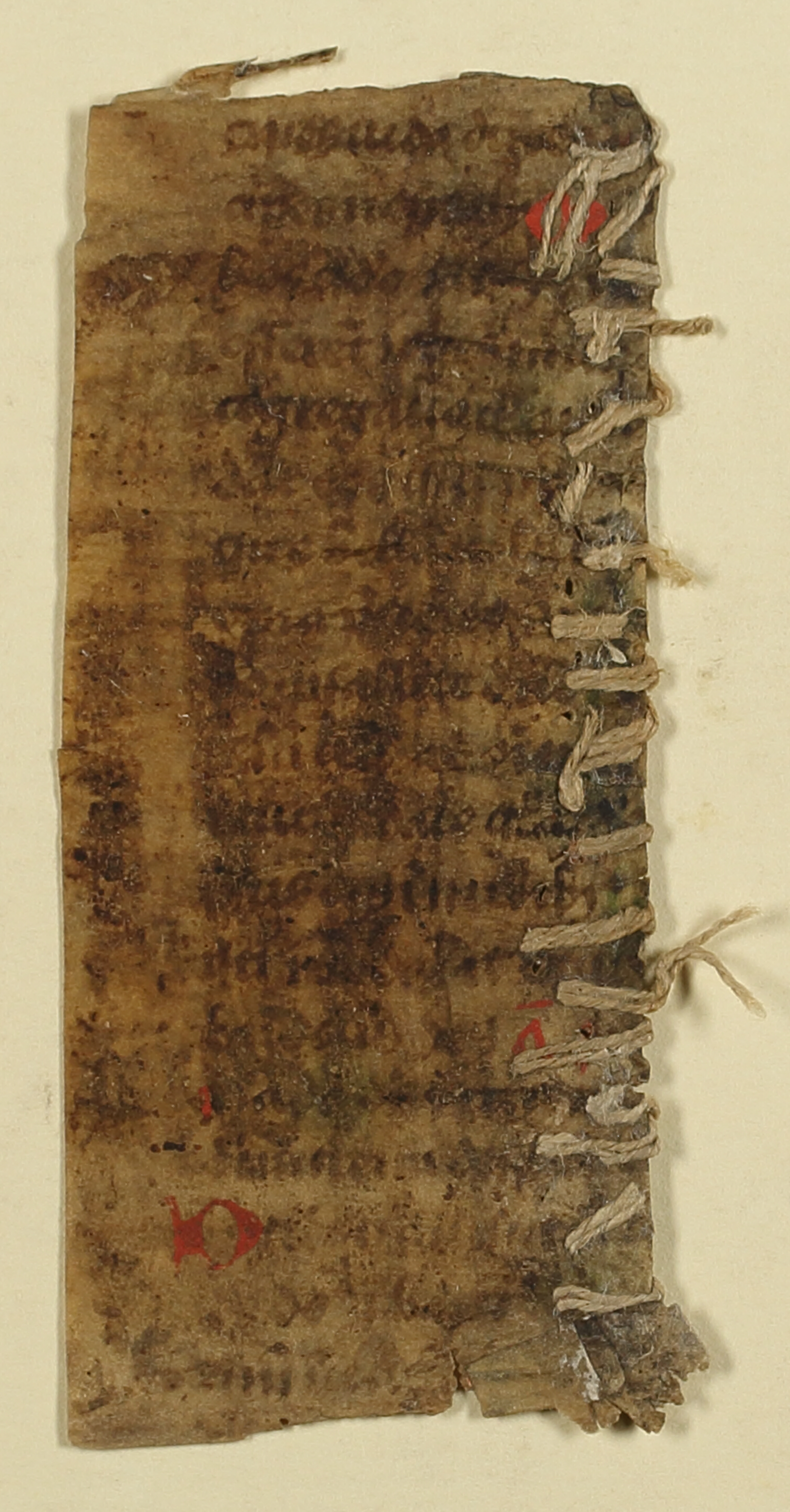
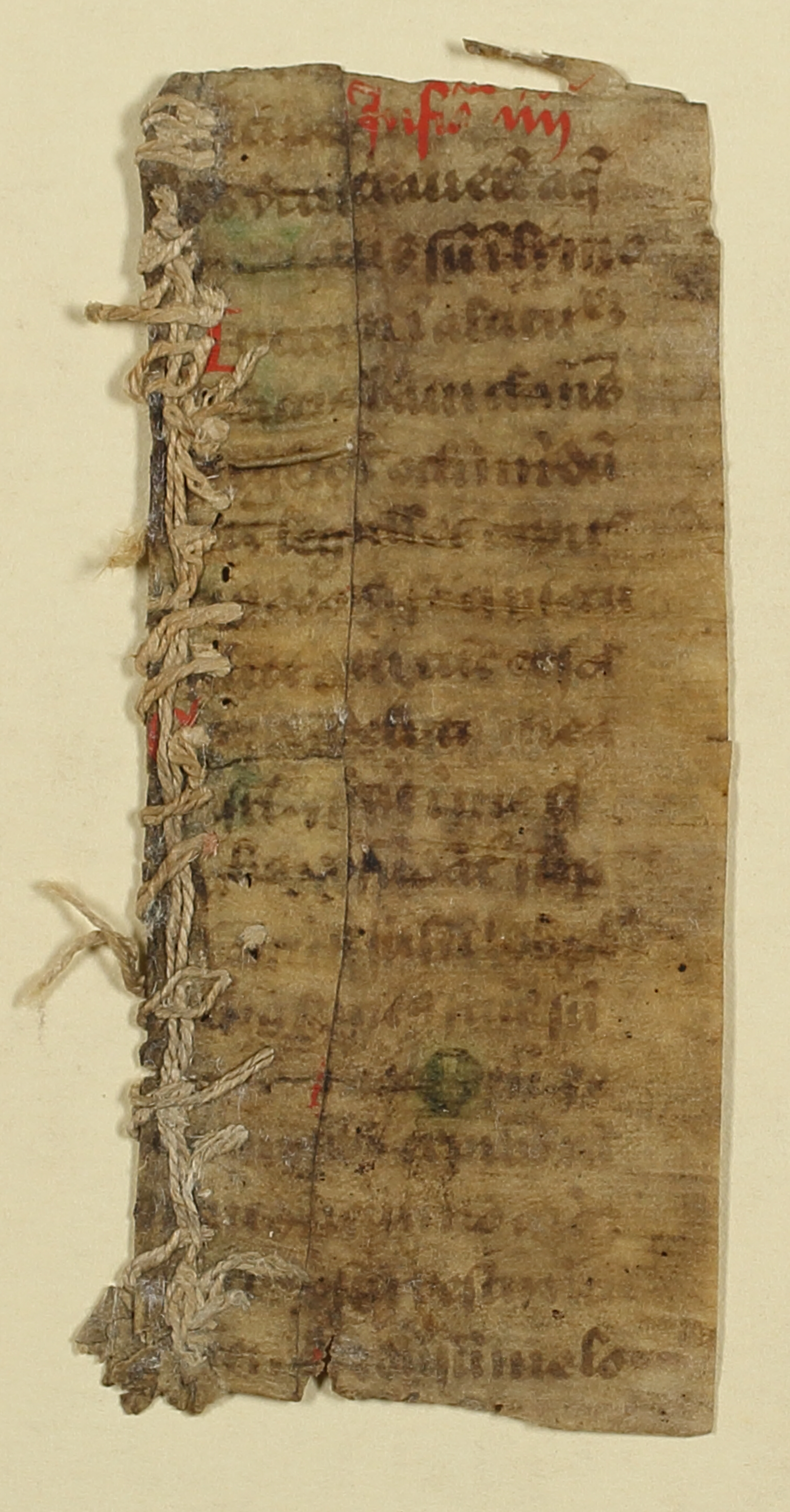
The other faces are 367a-1: 1r, 367a-2: 1r and 367a-2: 1v. Their readings are word shapes, not text:
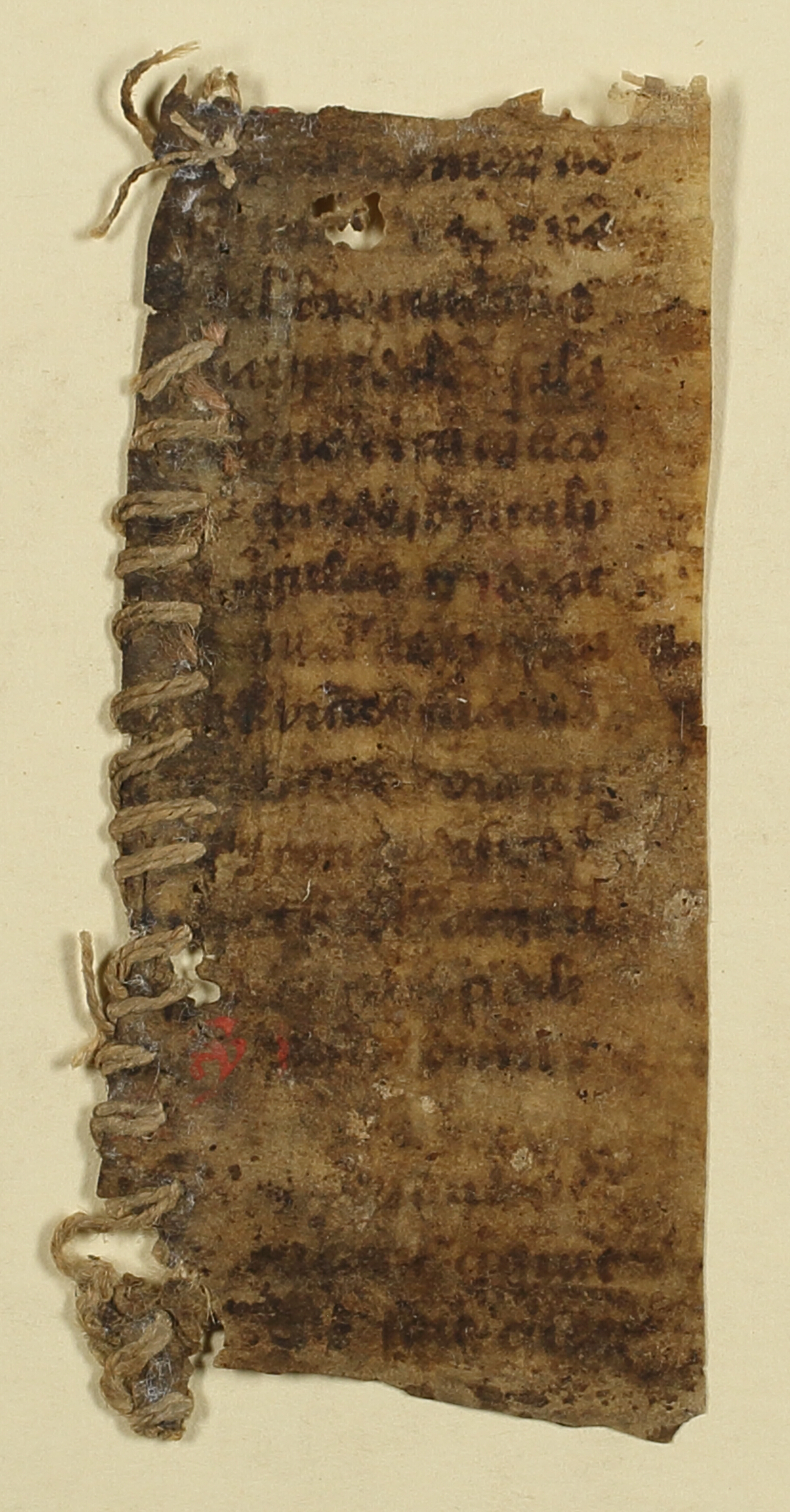
- 367a-1: 1r, line ends: "... benedictus? dominus?", "... deus salu-?", "...ciendi? et domini do-?", "... capilli?", which would be Psalm 67:20-24.
- 367a-2: 1v, line ends under a red rubric that ends in the numeral "iiij" (the catalogue reads "fer. iiii", Wednesday): "... david?", "... succendit?", "... salinarum?", which would be the biblical title of Psalm 59. The title in its usual wording is too long for the lines, so it would have to be shortened here; this is unresolved.
- 367a-2: 1r, line beginnings: "Divitie? si a[...]" in the first line, which would be Psalm 61:11, with a red initial about fifteen lines lower.
One observation supports these placings beyond the readings themselves. On each strip the two faces are the two sides of the same piece, so their texts must be one column apart. From Psalm 67:20 to 68:15 is 2,200 letters, and from the title of Psalm 59 to 61:11 is 2,119 letters; at the 40.5 letters a line measured on 367a-1: 1v these are 54 and 52 lines. Both strips thus imply the same column of about 54 lines, in a book of two columns where each strip keeps part of the outer column of a recto and of its verso. The two strips come from different places in the book, so from two leaves or from two columns of a bifolium; which was not worked out.
Not claimed: the date and origin, which are the catalogue's; whether the book was a separate psalter or the psalter of a breviary; the house or order, with monastic use remaining provisional on the evidence of one division initial and one probable rubric; any relation to other fragments from the same host volume.